The Danakil Depression, located in northeastern
Ethiopia near the borders of Eritrea and Djibouti, is one of
the most geologically unique and extreme environments
on Earth.
The geology and environmental analysis Danakil
Depression prepared by “AGELGILE Ethiopia Tours”
Experts
1. Tectonic Setting
• The Danakil Depression lies at the triple junction
of three tectonic plates: the African (Nubian),
Somali, and Arabian plates.
• It is part of the Afar Triangle or Afar Triple
Junction, a rift system where these plates are
pulling apart—a process known as continental
rifting.
• This divergent boundary has caused the Earth's
crust to thin and sink, creating a depression.
2. Formation and Evolution
• The depression began forming around 30 million
years ago during the Oligocene epoch, due to the
rifting of the Arabian plate away from Africa.
• Active rifting continues today, and the area is one
of the few places on Earth where a mid-ocean
ridge system is above sea level.
• Over time, extensive volcanic activity and faulting
shaped the region's unique topography.
3. Volcanism and Hydrothermal Activity
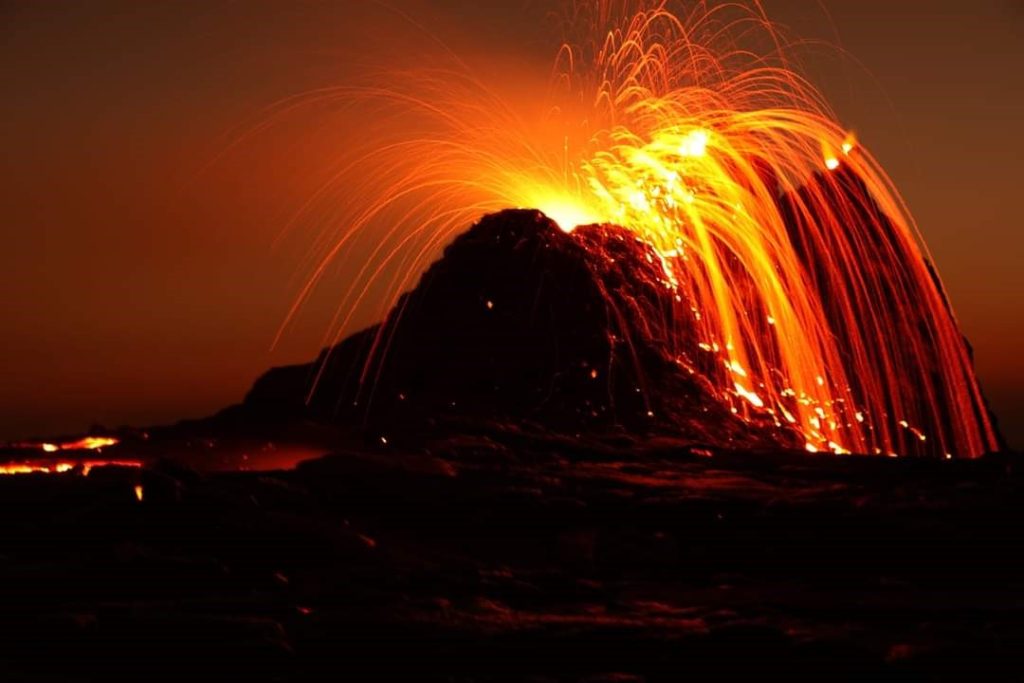
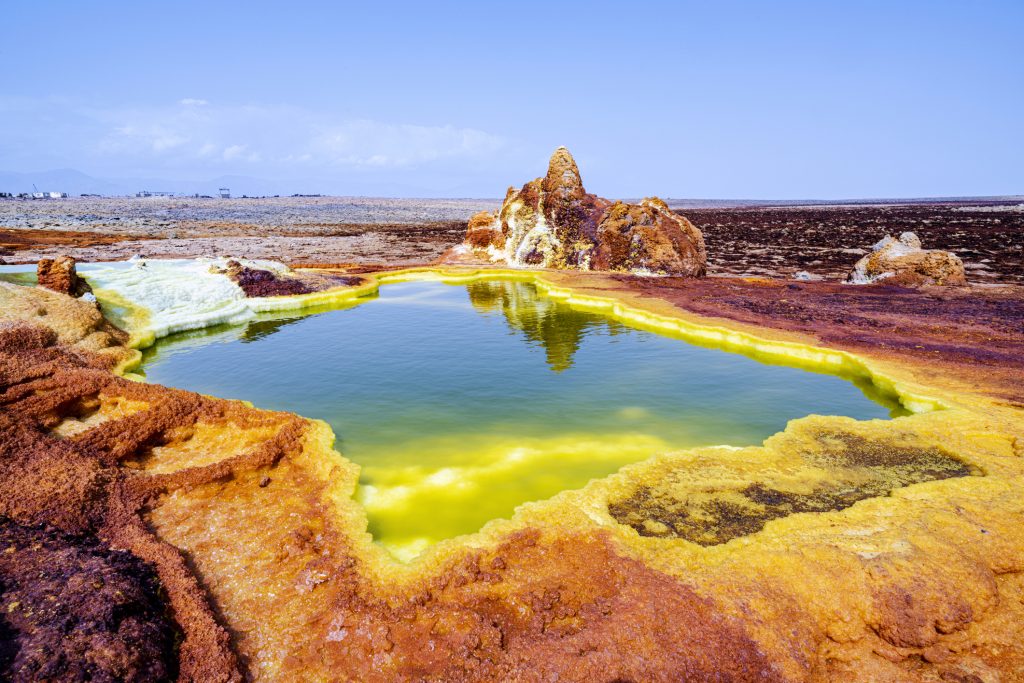
• The area is home to several active volcanoes,
most notably Erta Ale, which has a persistent lava
lake, and Dallol, a hydrothermal area with colorful
salt formations and acid pools.
• The volcanism is basaltic in nature, due to the
thinning lithosphere and mantle upwelling
beneath the region.
• Hydrothermal systems at Dallol are fueled by
magmatic heat and interaction with brine-rich
waters, producing surreal landscapes of bright
yellows, greens, and reds.
4 Salt and Evaporate Deposits• The Danakil Depression sits over 100 meters
below sea level, making it one of the lowest and
hottest places on Earth.
• The area was once covered by a shallow sea,
which evaporated over time, leaving behind thick
layers of evaporate minerals, primarily halite
(rock salt).
• Extensive salt pans and salt mining operations are
found in the region, with traditional salt caravans
still operating today.
5. Astrobiological Interest
• The Dallol hydrothermal area is studied as an
analog for extraterrestrial environments, such
as those possibly found on Mars or Europa, due to
its extreme acidity, temperature, and salt content.
Summary
Feature Description
Tectonic type Divergent boundary, triple
junction
Age ~ 30 million years ( rift
development)Main process Rifting, Volcanism, Salt
deposition
Notable Features Erta’Ale volcano, Dallol
hydrothermal field
Economic resources Salt & Sulfur
To create an awareness for our customers, AGELGILE
ETHIOPIA TOUR always provides reliable and relevant
Information about the destination.