

Rock-Hewn CHURCHES Of LALIBELA
The great days of Axum were followed in the early
Middle Ages by the
rise, in the Lasta mountains to
the south, of King Lalibela, who excavated a dozen
or more remarkable rock-hewn churches. They are mainly to
be found at the settlement called after their founder, and
have been ranked among the Wonders of the World.
Rock-hewn churches, it may be noted, are not 'unique to
Lalibela Or its neighbourhood, and may indeed have been
first excavated within a
century or so of the coming of
Christianity in the early fourth century AD. Over hundred
such churches have been described in the province of Tigray
alone. Others can be seen all over the Ethiopian region,
from Eritrea in the north, to Goba in Bale a
thousand miles
to the south At least four rock churches are known to have
been excavated in recent years.
KING LALIBELA
The life of King Lalibela is shrouded in legend One holds
that when he was born he was surrounded by a swarm of
bees. Seeing this. his aother, reputedly cried out, The bees
know that this child wel-be omsg! He was accordingly
given the name lalibela
it means 'The Bee Recognises
his Sovereignty'
Lalibela, whe* he gret drsaid to have been a remarkably handsome ehe cszla Lalibela, or Acts of
Lalibela, a Ge'ez text written in is praise, claims that he
was 'perfectly beautiful, without defect from head to foot;
his cheeks were as red as the skin of the pomegranate, his
eyes were like the morning star. Everyone who saw him
admired his bearing and majesty, and foretold his royalty.
The Almighty, we are told, was likewise assured of
Lalibela's forthcoming sovereignty, and arranged for him to
be taken to Heaven to see the churches there. The Lord then
addressed him kindly saying:
Have no fear as to your becoming King, for it is not for
the passing glory of this world that will make you King, but
that you may construct churches like those you have seen
[in Heaven].
It is for this purpose that I will give you the
unction of kings and place you, the anointed one, over my
people until you have built sanctuaries.You are worthy
of bringing them out of the bowels of the earth.
LALIBELA
Above: Solemn and serene, a priest emerges from one of Lalibela's
spectacular rock-hewn churches.
THE CHURCHES
Lalibela duly established a capital at a place called Roha,
where the red volcanic rock Was suitable for the excavation
of churches. The locality was subsequently renamed after
Lalibela.There he founded a remarkable group of churches, which
made his capital a major place of pilgrimage. The Cadla
Lalibela claims that visiting these churches was equivalent
to seeing the face of Christ. Lalibela, or followers,
attempted to model the settlement on the Holy City of
Jerusalem. Several places were thus
given Biblical names.
Graves in the church of Madhanie Alam were described as
those of Abraham, Isaac, and Jacob. A local hill was given
the name of Calvary; and a nearby torrent bed was called
after the Jordan river.
THE STORY Of LALIBELA'S CHURCH-BUILDINGS TOLO IN THE GADLA AS FOLLOWS:
Lalibela ordered the manufacture of a large number of iron
tools of all kinds, some to cut the stone, others to hew it, as
well as many others for the fashioning of a temple in the
rock. From that moment Lalibela no longer thought of his, oela's
led Roha,excavation,amed afterrches, whichThe Cadlaas equivalenthis followers,Holy City of Biblical namesdescribed aswas given was called AS FOLLOWS:
Above: Oblivious to visitors, a devoted Lalibela monk continues with his daily prayers.own needs, or those of his wife, but fortified in everything
by the Holy Spirit, dreamt each day of creating the churchesin the likeness those he had seen in Heaven. After having
made the tools necessary for this work he ordered everyone to assemble, and spoke to them, saying: "You who are all gathered here, tell me what wages you want to help create these churches which God has ordered me to make; let every man, excavator of the soil, and stonecutter alike, tell me what wage he wants Speak up, all of you, and what you ask
of me I will give you, for I do not want your labour to be
without recompense, nor that you should murmur."
'The angels who were with the King made the measurements, indicating the required dimensions for all the churches. The land where the churches were to be built he purchased with gold, which was a great kindness on his
part, for if he had wished to take it without payment who
could have prevented him since he Wwas King?When he began to construct the churches, angels came
to help him in each of the operations; there was thus company of angels at work, as well as a company of men,
a for the angels joined the workers, the quarry men, the stone
cutters, and the labourers. The angels worked with them by
day, and by themselves by night. The men would do a cubit's
work during the day, but would find a further three cubits
completed on the morrow, for the angels worked throughout
the night. Seeing this, the worker exclaimed: "How
wonderful! We did a cubit's work yesterday, but today we
have four!" They doubted whether the work was being accomplished by angels because they could not see them,
but Lalibela knew, because the angels, who understood his
virtue, did not hide from him. The angels were his companions, and for that reason did not hide from his sight.
churches were fashioned out of a single stone.'It was in this way the Gadla concludes, that the Secolarse
was the early sixteenth-century Portuguese traveller, Francisco
The first foreign observer to describe the Lalibela churches Alvares. Describimg
on him, he concludes: we
buildings, because it seems
if I write more, and becaus-y igcrch written they may blame me for untrue rather
by God, in Whose power I am, that al that
truth, and there is much more than what I have Seen,
I have left it that they may not taxst
me falsehood.The town of Lalibela duly became one of prestigious pilgrims destinations. It was
centuries by innumerable pilgrims from far
congregated around its remarkable church
festivals, as they indeed still do to this day.
It is quite possible that foreign craftsı
assisted in the decoration of some Lalibela churchs
in the shape of the reverse swastika may for the influence of building craftsmen from Inog
however, be emphasised that the principal
features of Axumite churches and undeniably
embody Ethiopian motifs that can betraced
way to ancient Axum.
An important feature of the Lalibela churche
in the monkey heads'
or symbolic epres
projecting beams of wood around church doors
This is an architectural-artistic feature which
the principal obelisks at Axum, as well as on the,
not returned from Rome. Some Axumite window
clearly copied from ornamental design on the principal Axumite obelisks.
Even though the soft red volcanic tuff excavation, rock-hewn churches is very different from the
like stone out of which the obelisks werait cut,
no denying that medieval Lalibela, from the
and artistic point of view, was the child of ancient Above: Ornate design in the interior of one of Lalibela's rock-hewn churches.
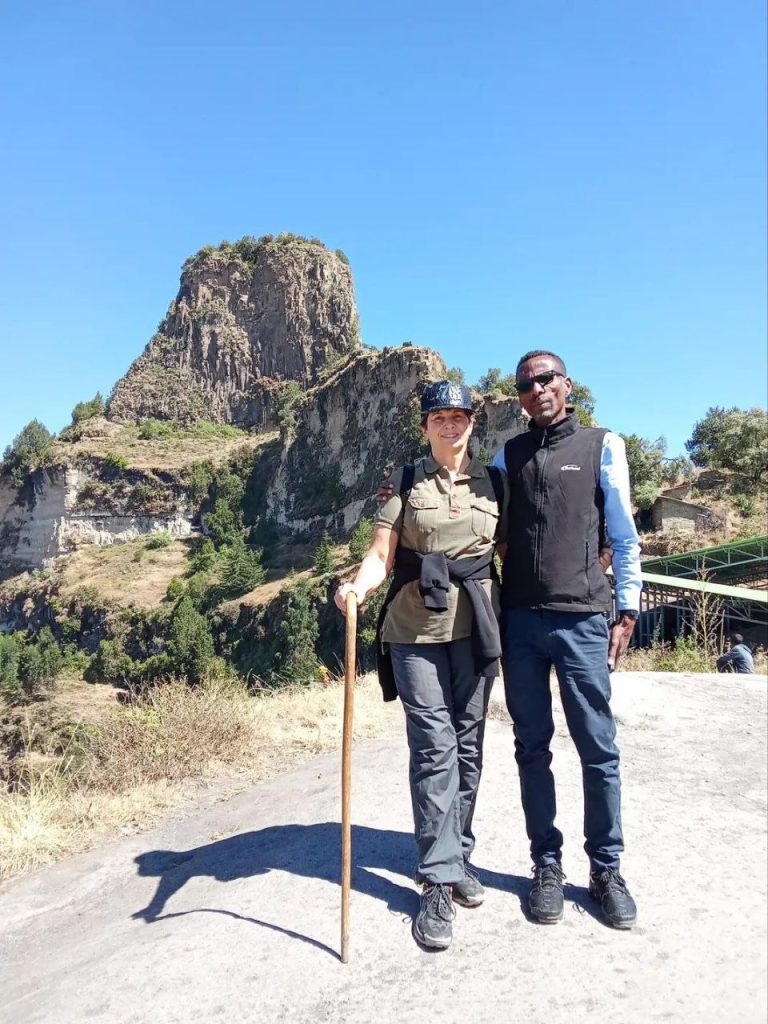
The highlands surrounding Lalibela are dotted with ancient monasteries that offer breathtaking views, historical treasures, and a peaceful glimpse into monastic life.
Asheton Mariam (monastery outside)
Ashetan Maryam Monastery – A challenging yet rewarding hike or mule ride takes you to this hilltop sanctuary with panoramic views and centuries-old manuscripts.
Yimrehane Kiristos (Monastery )
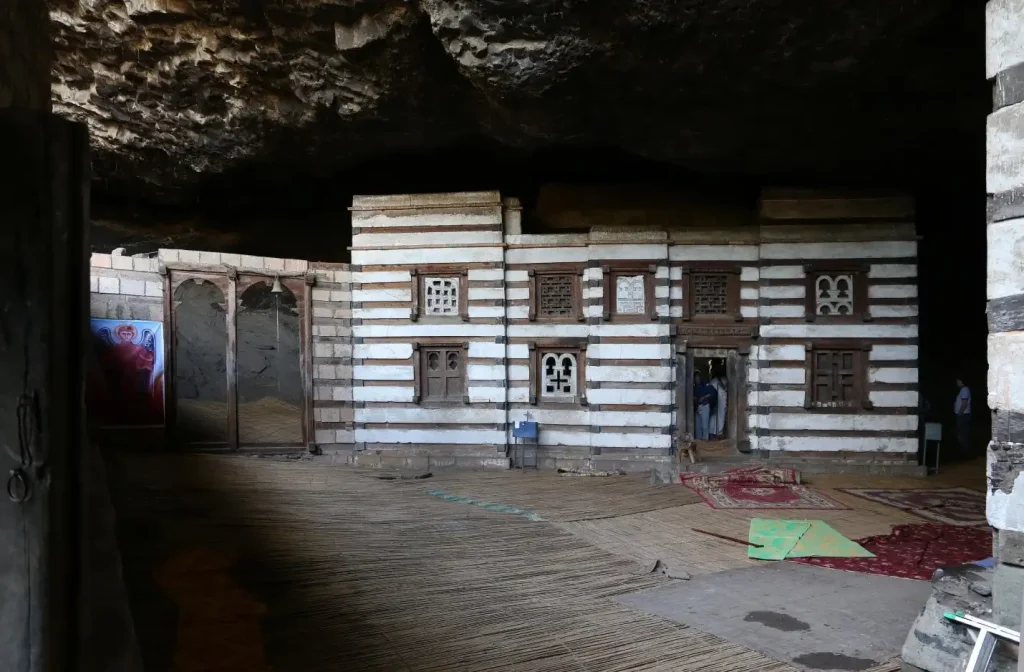
• Yemrehanna Kristos – Older than Lalibela’s rock churches, this cavern church is built in an elegant Axumite style and adorned with intricate paintings.
Na'Akutolab (Monastery)
• Nakuto La’ab Monastery – A cliffside retreat housing sacred relics, illuminated manuscripts, and a rock-hewn sanctuary fed by a holy spring.
Visiting Lalibela and its surrounding monasteries is not just a sightseeing experience—it is a journey into Ethiopia’s soul, where history, faith, and culture come alive.